I’m not a big fan of rain, but when that rain turns into its solid state, it becomes magical fairy dust.
Maybe it’s because we don’t get much snow, and when we do, you never know how long it will last. But every time that white stuff shows up, I feel the urge to take pictures.
The First Dusting
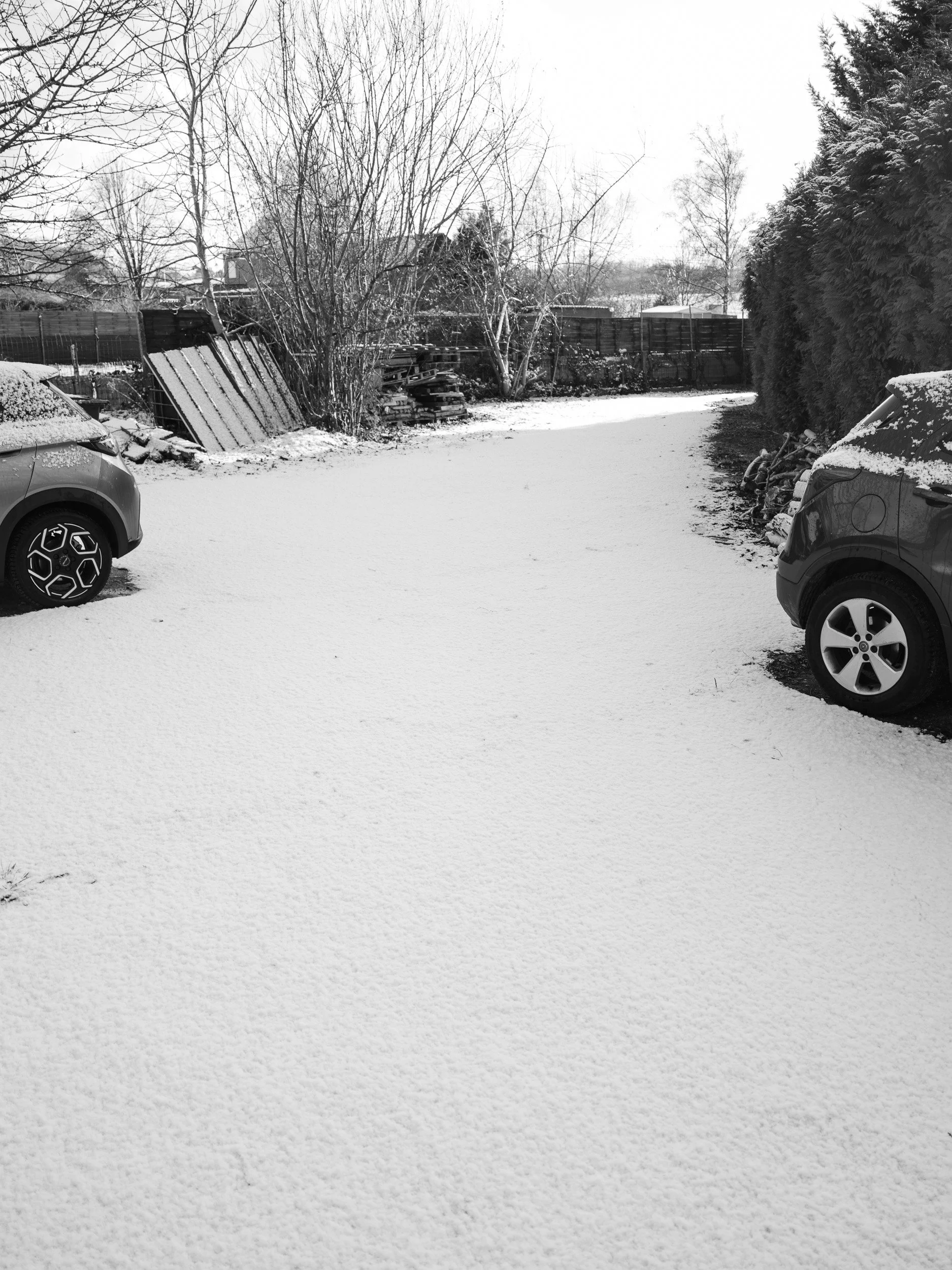
It started with a small dusting of snow. Not much, maybe one or two centimeters, but enough to instantly transform familiar surroundings.
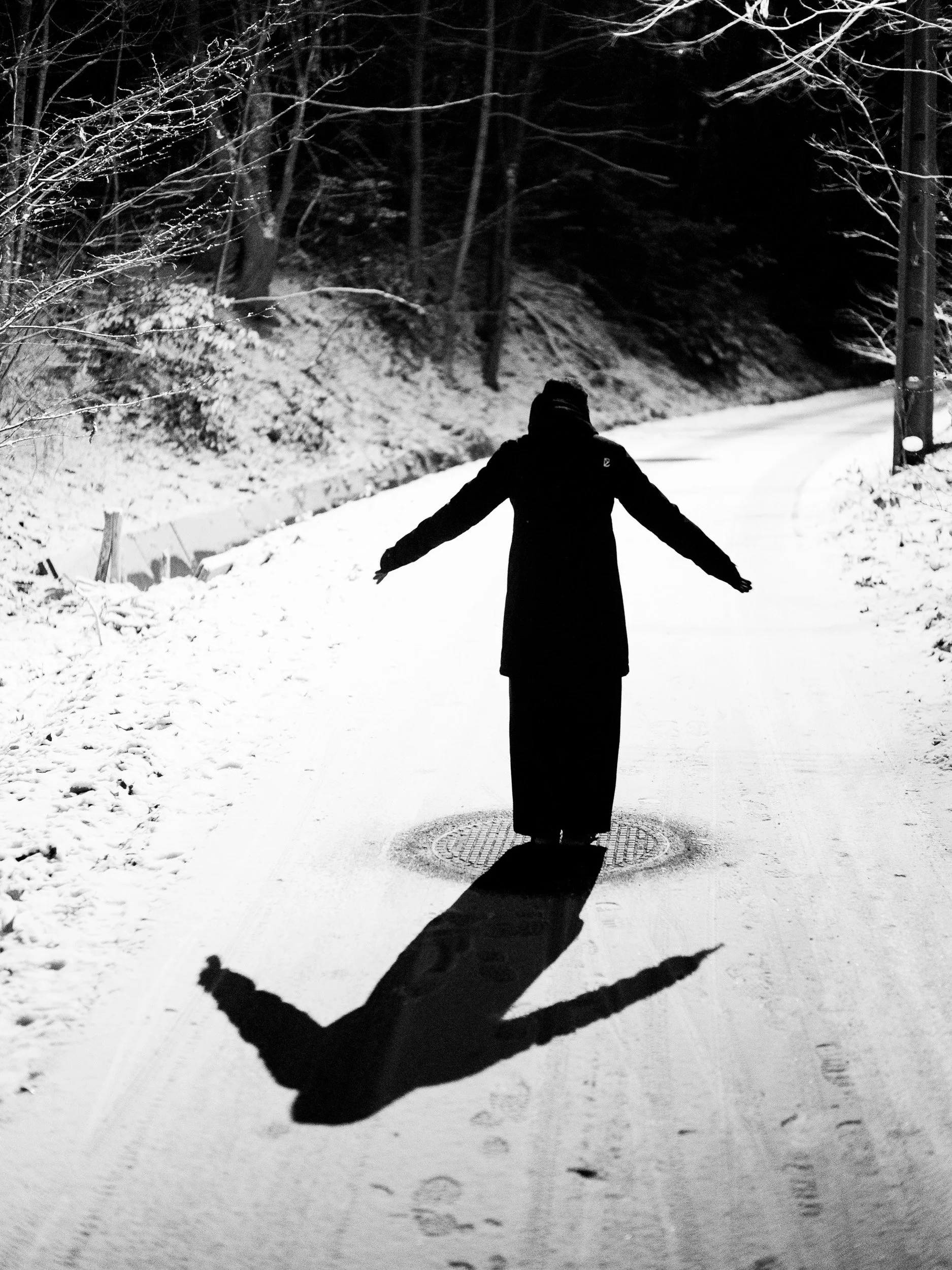
Even though it was dark by the time I could go out for a short walk, the snow changed that too. It multiplied the available light, simply by reflecting it. Places I know by heart suddenly felt different, calmer, easier to read.
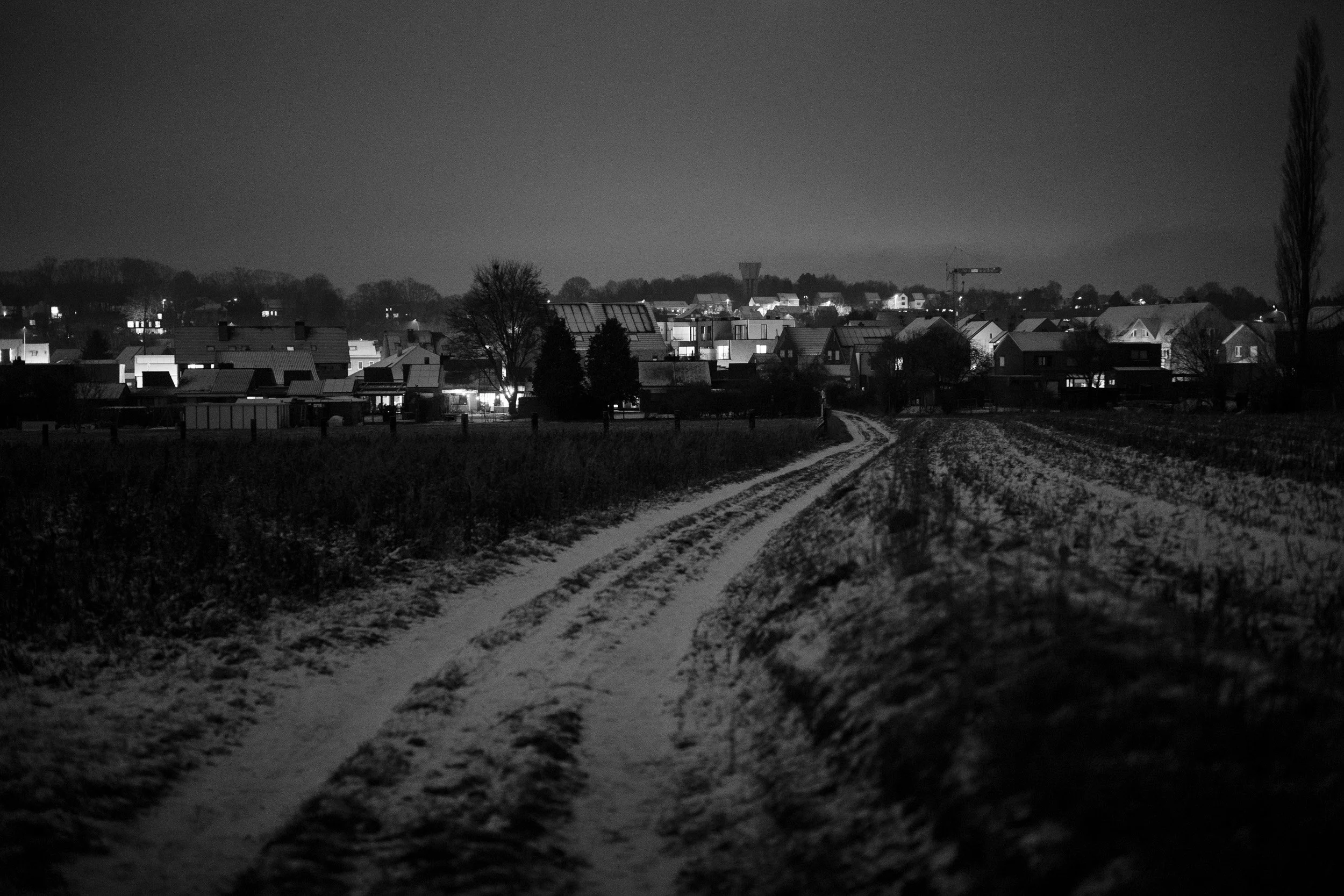
This image in particular shows this well. Without the snow, the foreground would have disappeared completely into darkness. The thin white layer brings it back and connects the empty fields with the residential area.
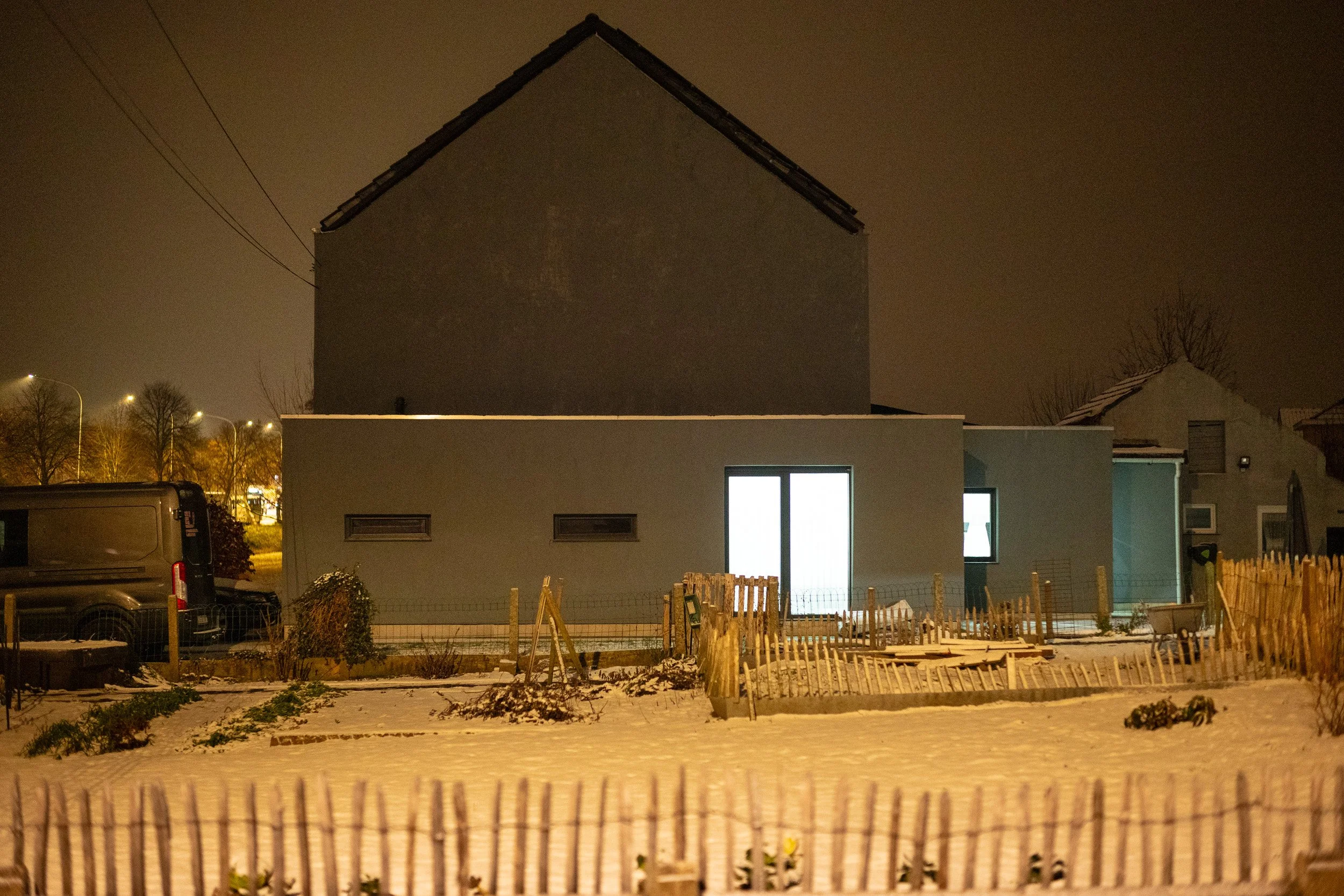
A picture of an unremarkable house. Nothing special, except for the blue, cool light inside that stands out even more against the reflection of the yellow street lights on the snow. I often notice how the color temperature of indoor light subtly hints at who lives there.
Forecasts and False Promises
That first dusting was gone almost as quickly as it arrived. But then the weather forecast started hinting at more.
These days, everything seems to require a certain level of drama, and the weather forecast is no exception. A “severe storm” often turns out to be little more than a stiff breeze, so I’ve learned not to get too carried away. When snow is promised in bold headlines, disappointment is usually close behind. Still, the day started in a promising way, right outside my office window.
Something felt off, in a good way. The birds behaved differently, more restless than usual, which I’ve come to read as a quiet signal that something is about to change.
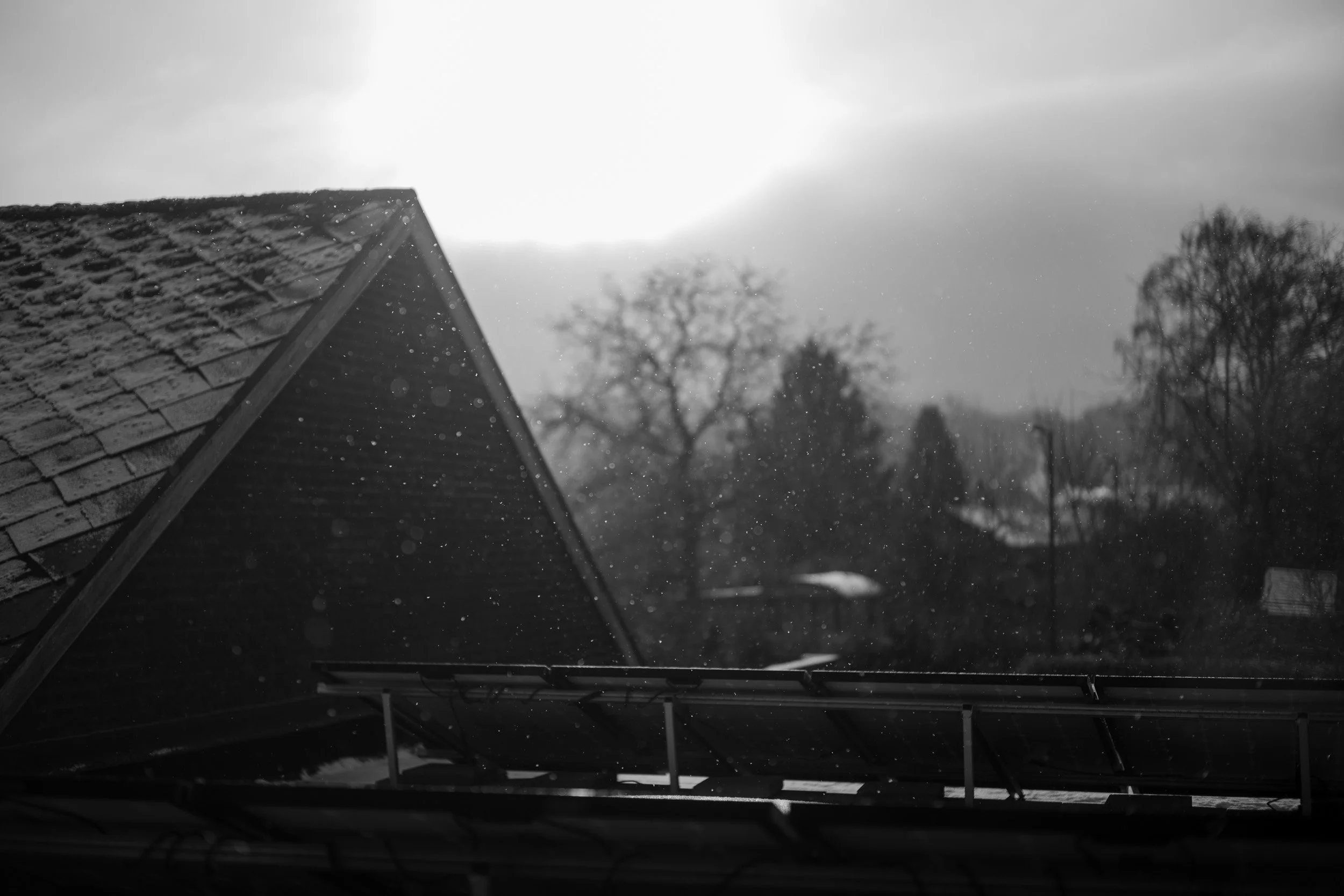
Is this it, or is there more to come?
The sky followed suit. It turned orange, then yellow, and then suddenly dark. Not stormy, just undefined. No structure, no clear clouds, just a heavy presence.
Would we actually get a proper snow show this time?
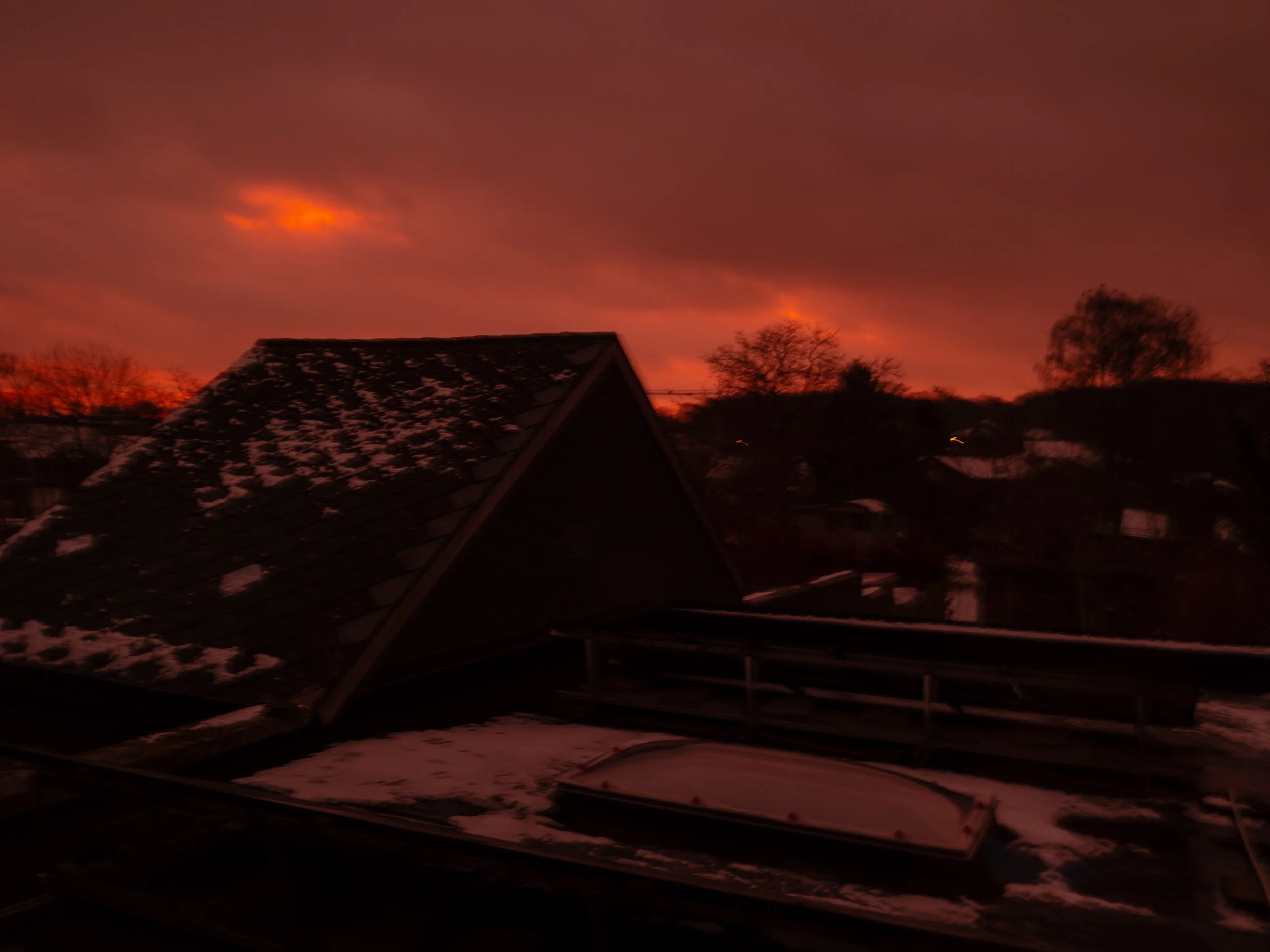
And then daylight shifted to an unreal colour palette.
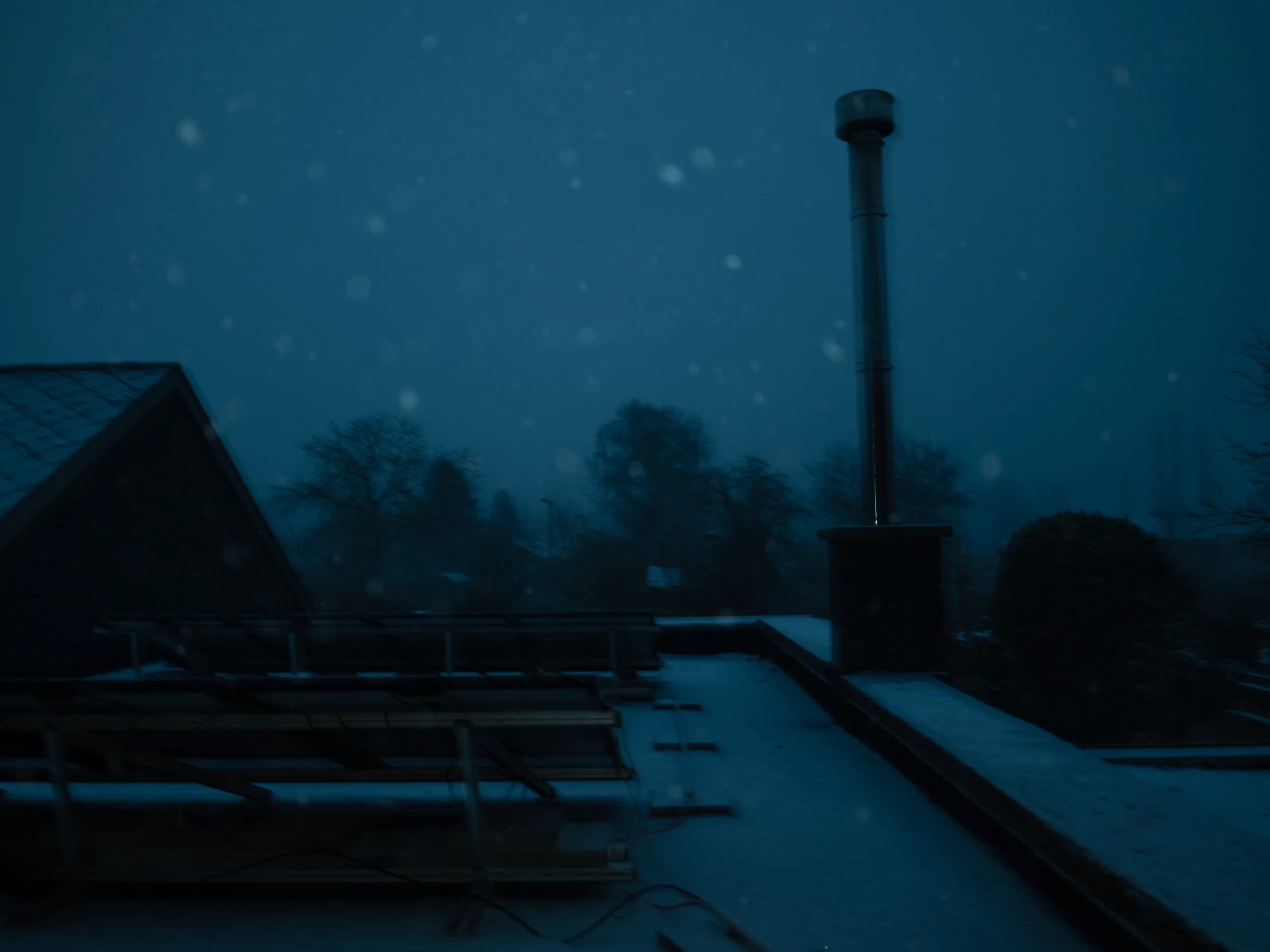
I first tried to make the snow more visible with a slow shutter speed but it didn’t give me the results I wanted.
Shoot what you FEEL
It’s not always easy to capture a scene that somehow talks to you. Often it’s felt more than it is clearly seen. I often tell students not to photograph what they SEE, but what they FEEL. So I tried to express how those magical flakes of frozen water felt to me.
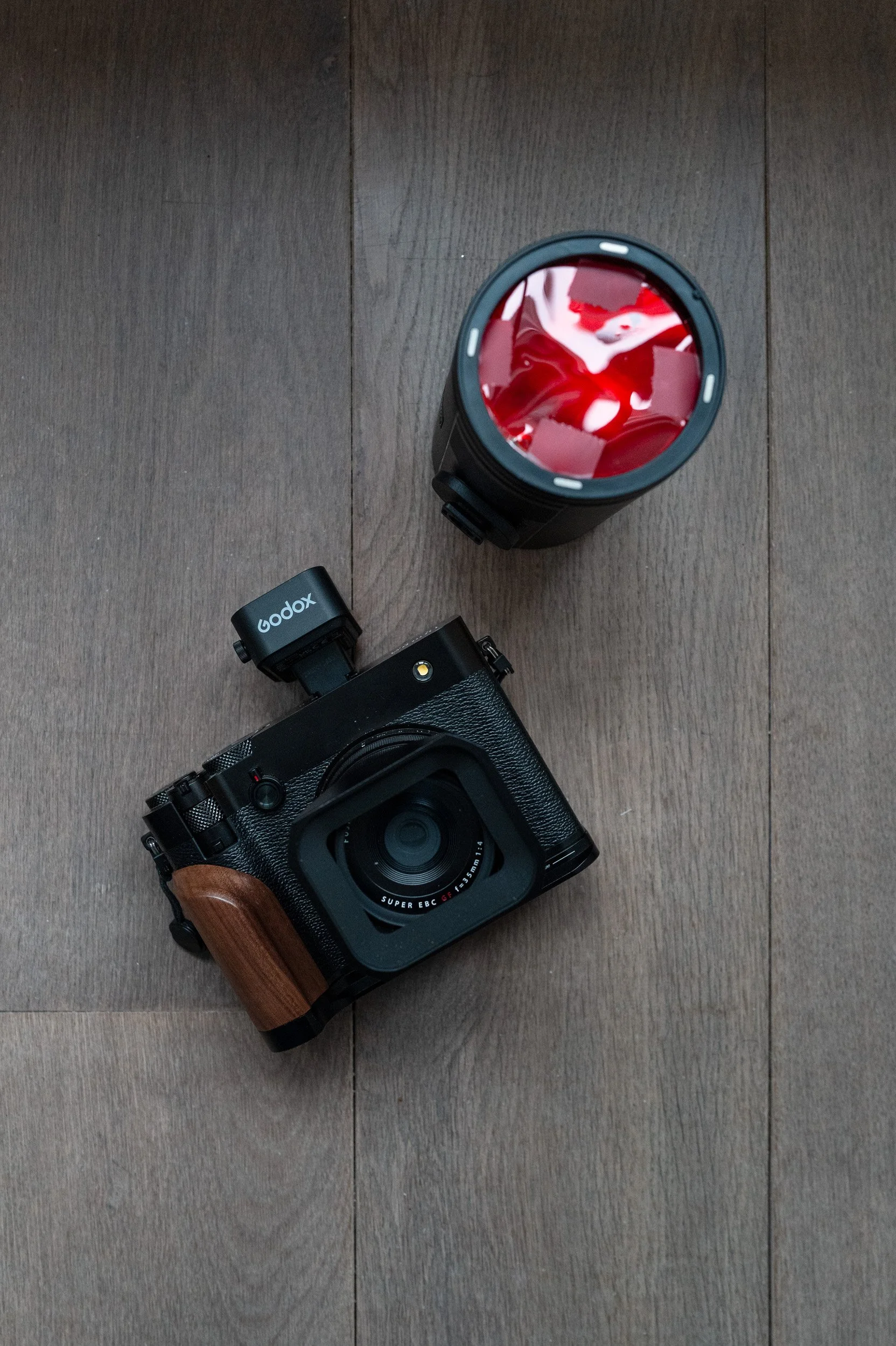
I grabbed my GFX100RF and a Godox AD100Pro flash and, almost instinctively, decided to add a red gel. I had it lying around from a commercial shoot, already mounted in the magnetic filter holder. The flash was triggered with a Godox X3 remote on the camera. I set it to manual power — somewhere around half or full power — and started playing with the zoom setting and its position to light the falling snow.
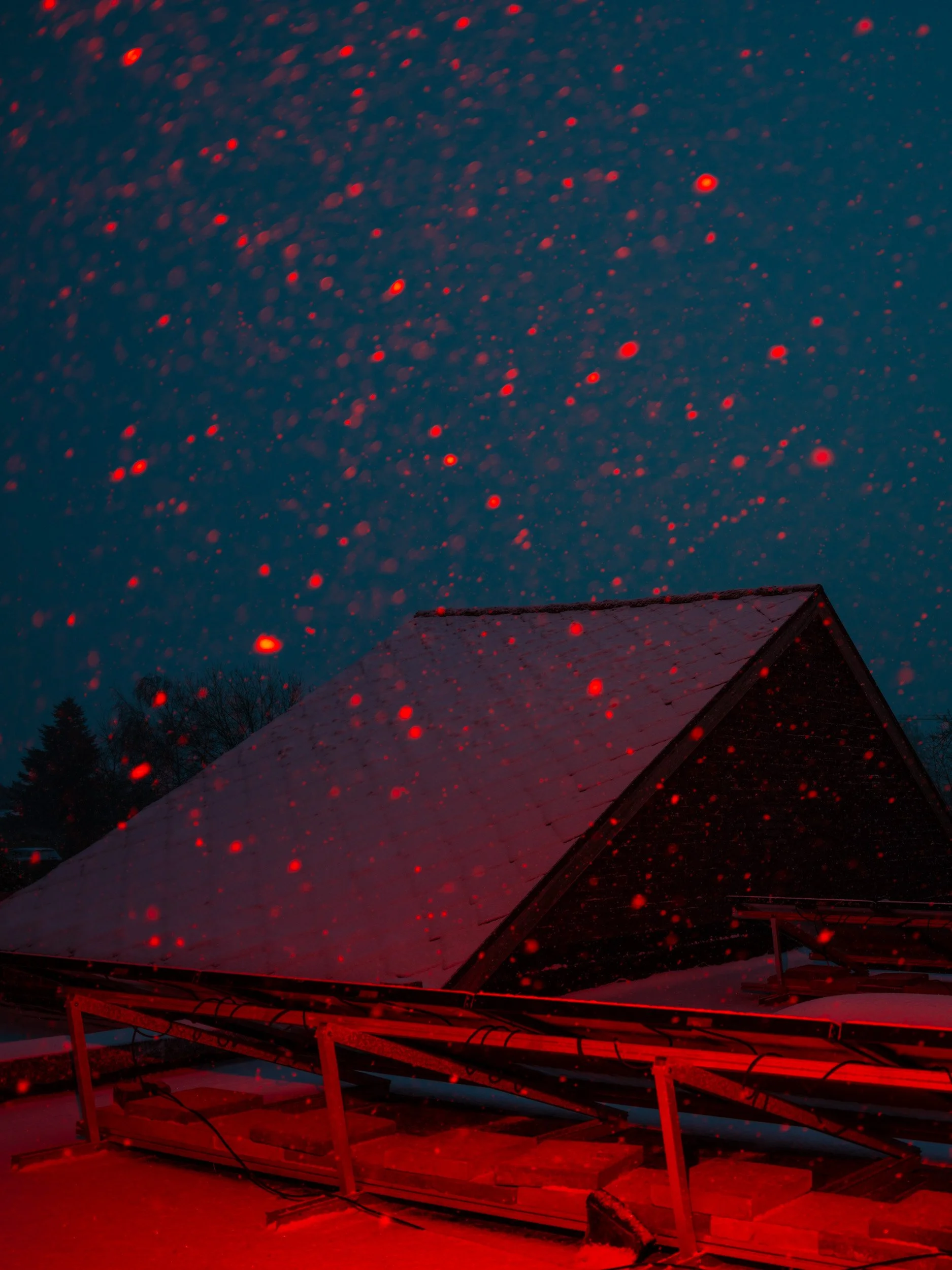
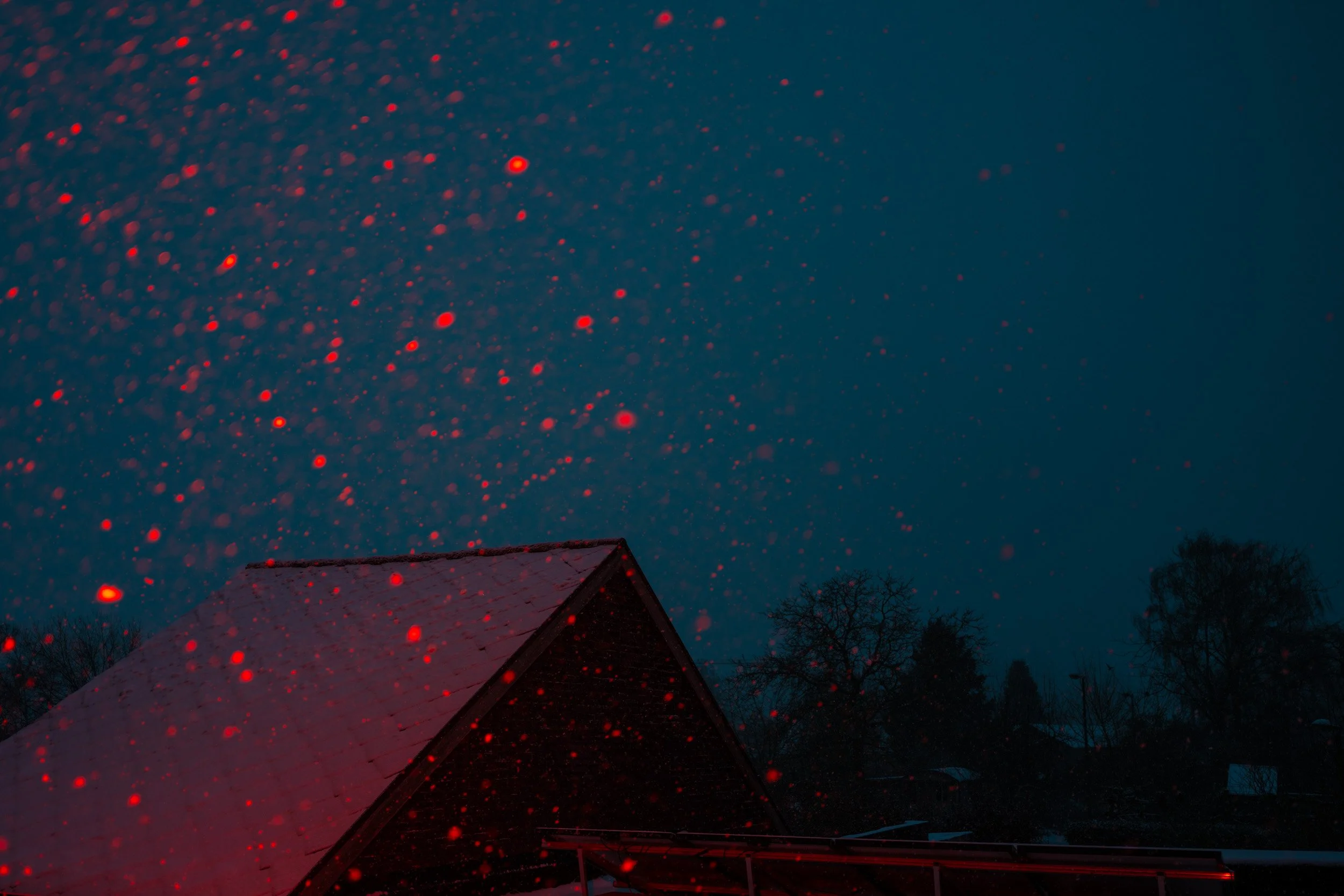
Underexposing the ambient light and adding the flash with the red gel to make the snow visible, changes the image from something I SAW into something I FELT.
This is a good example of using something you’re normally taught to avoid to your advantage. Because the light source is close to the camera, it reflects off every particle in front of the lens. If you’ve ever driven through fog with your high beams on, you know how blinding that can be. But if your goal is to show the snow, that exact same principle suddenly works in your favor.
I’m not entirely sure why I chose the red gel. My brain immediately said: that’s a stupid idea. And I’ve learned that this is often the best possible reason to try something anyway.
Is it a master image? Or even portfolio-worthy? Absolutely not. But it’s the kind of experiment that gets stored somewhere in the back of my mind. Maybe one day it will be the exact technique I need or it might spark something entirely different.
The more experienced you become, the easier it is to dismiss these “stupid” ideas. I keep forcing myself to try them anyway. Nine out of ten times, they are stupid. But that one time out of ten makes all the others worth it.
A Brief Goodbye
We got one more day to enjoy the snow, and then it disappeared just as quickly as it had arrived.
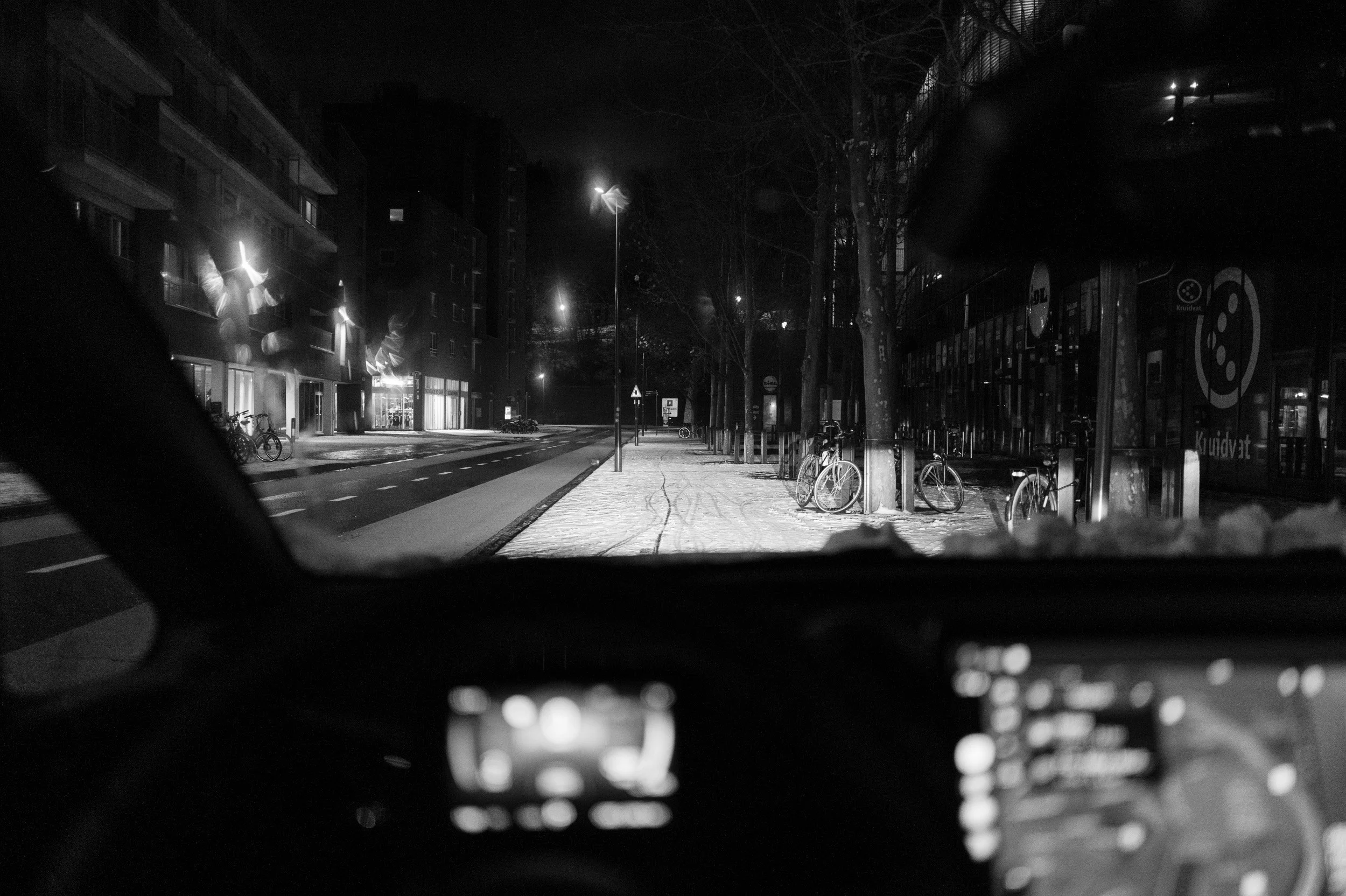
The roads were cleared pretty quickly but even in town soms snow remained.
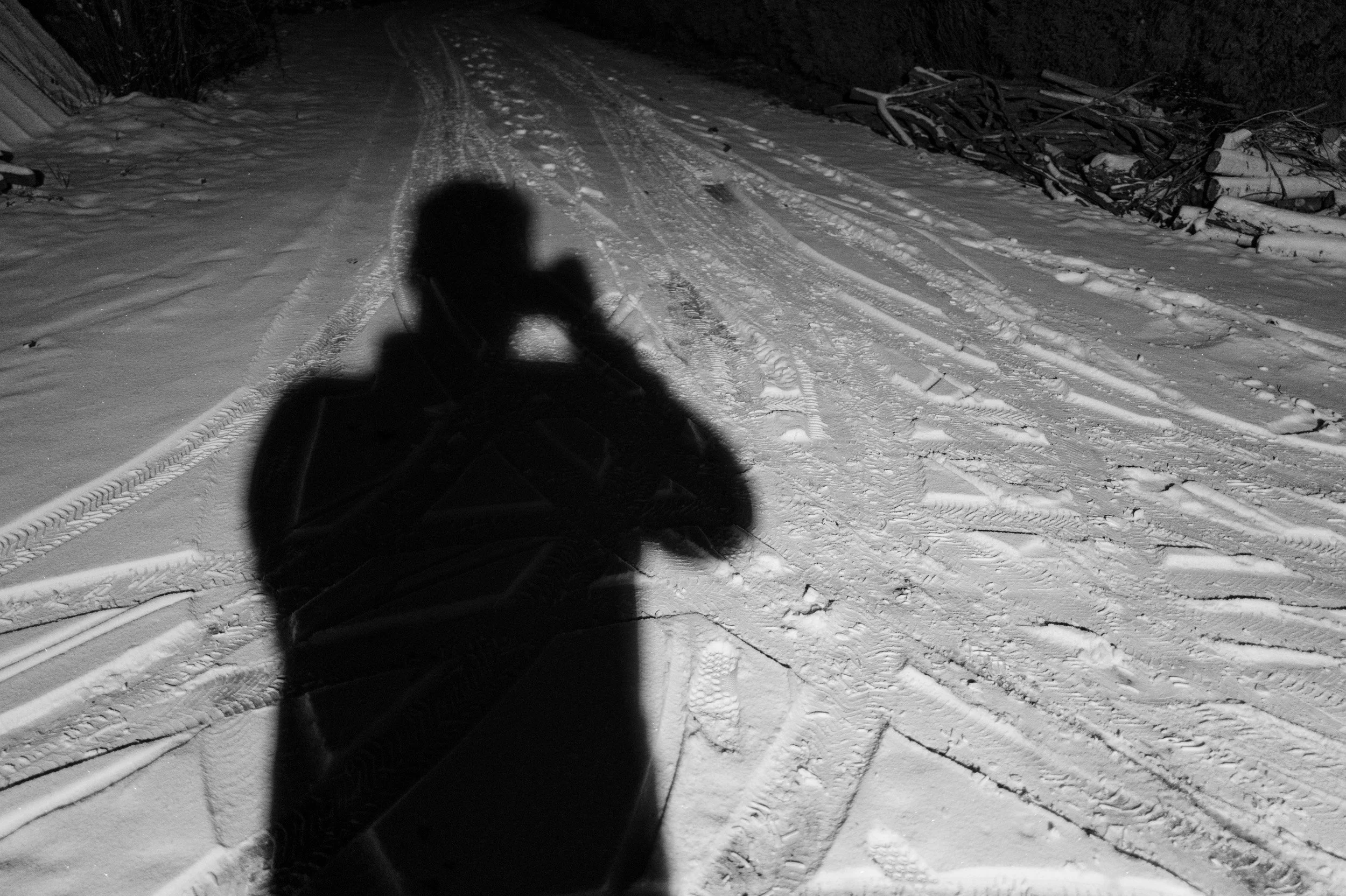
Luckily nobody clears our driveway.
The beheaded, very modern version of a snowman snow-person, didn’t survive for long. But not before I gave it the red-flash treatment.
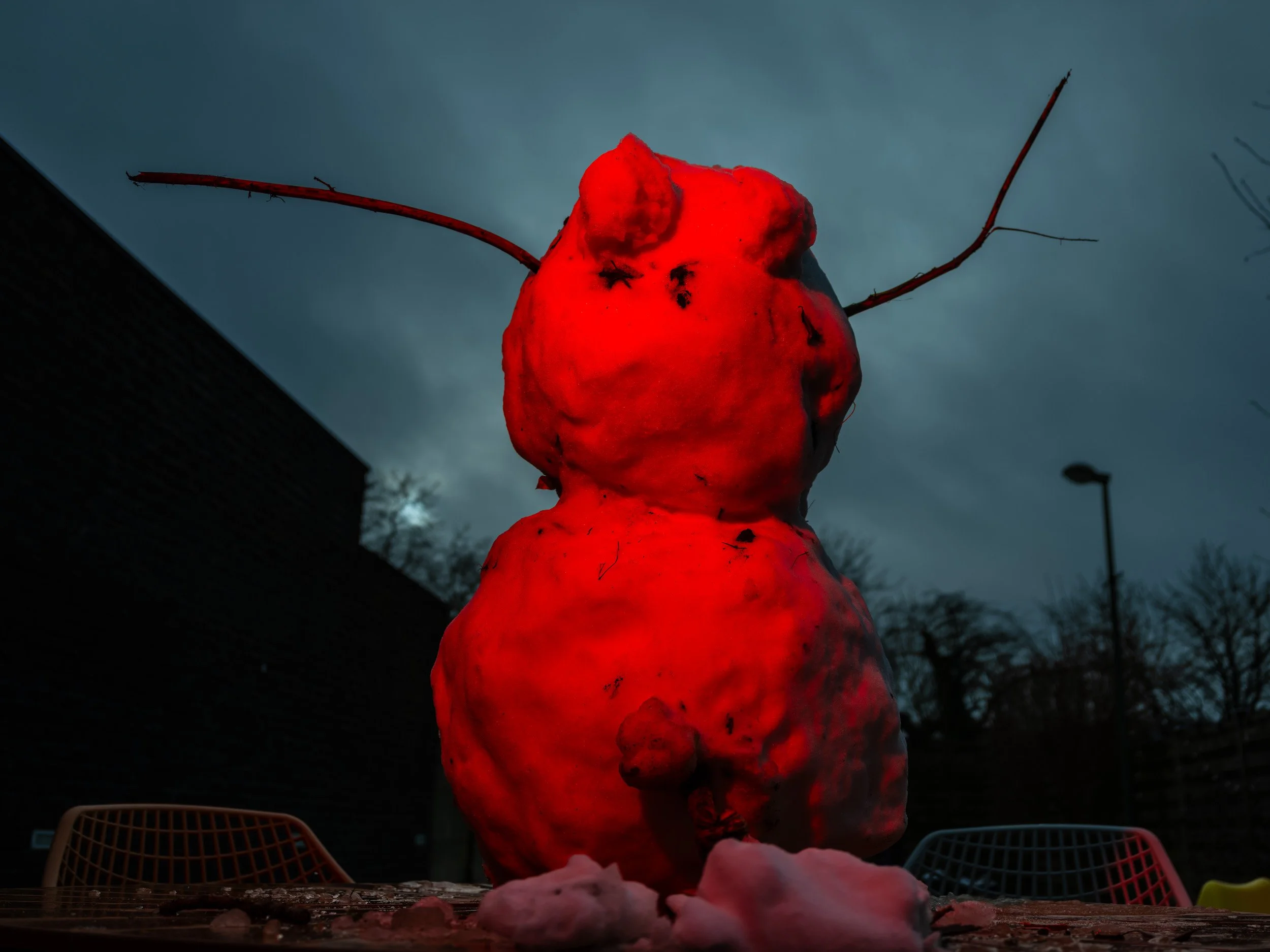
I guess the red flash thing fits the rather intriguing physique of the snow person some of the kids made.
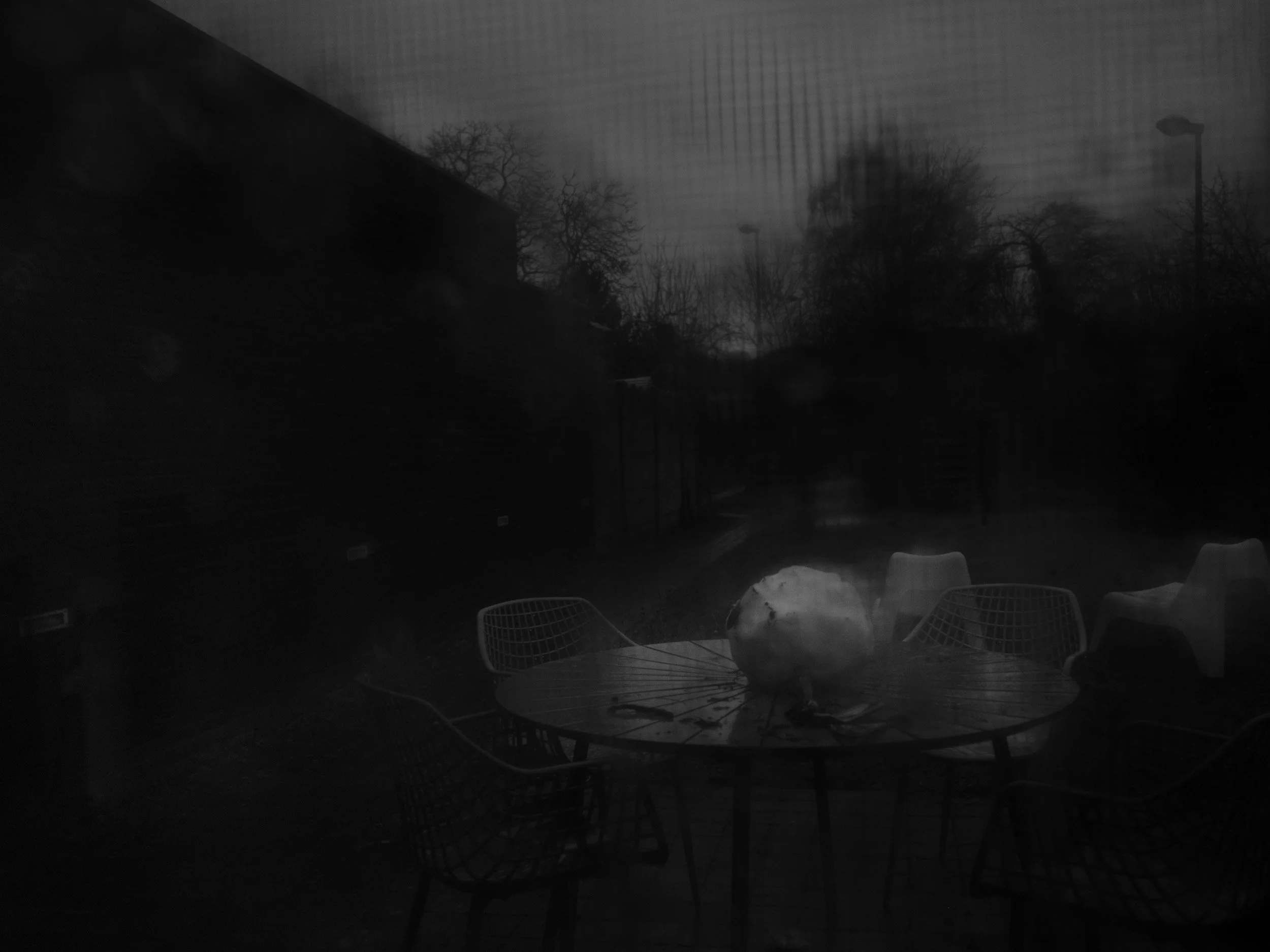
A day of rain later, this was all that was left.
Snow, Again … But Different
And then, only a day later, the snow was back. Different this time, less of it, but more refined, more delicate. Instead of a blanket, it came as a fine powder, clinging to every little twig. With no wind to disturb it, the snow had time to freeze in place.
We went for a walk and enjoyed this quieter, more fragile version of winter while it lasted.
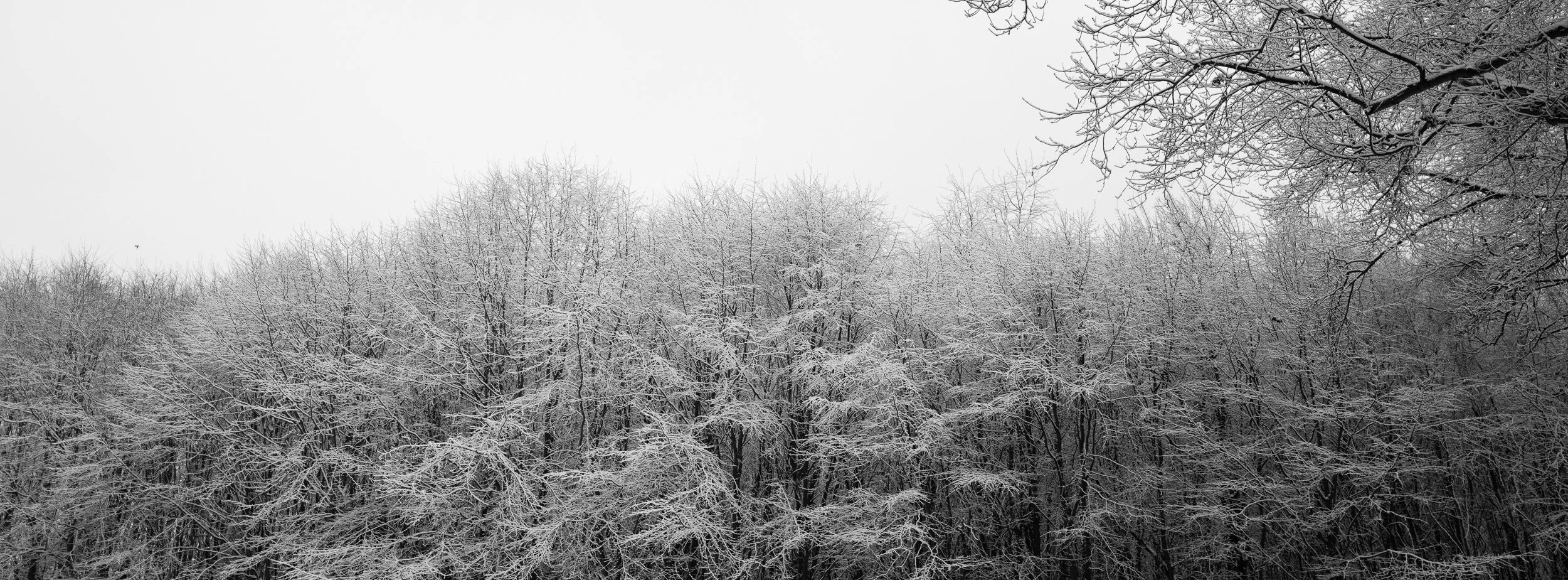
I have a bit of a love/hate relationship with the 65:24 crop, also called “X-pan crop”. I think it’s a bit overhyped but at the same time I like how that cinematic crop allows you to exclude parts that aren’t interesting.
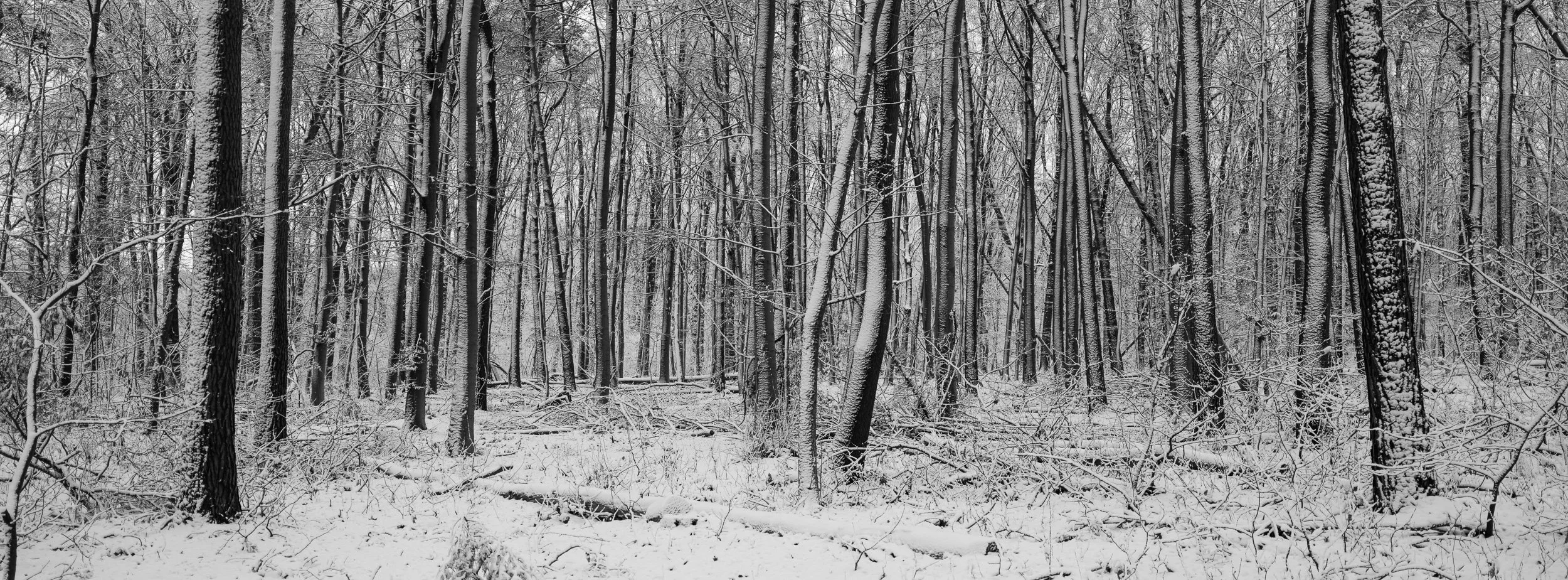
Maybe these panoramic crops just don’t work on small screens. They don’t work very well on social media and even on a laptop screen, you can’t really enjoy them well.
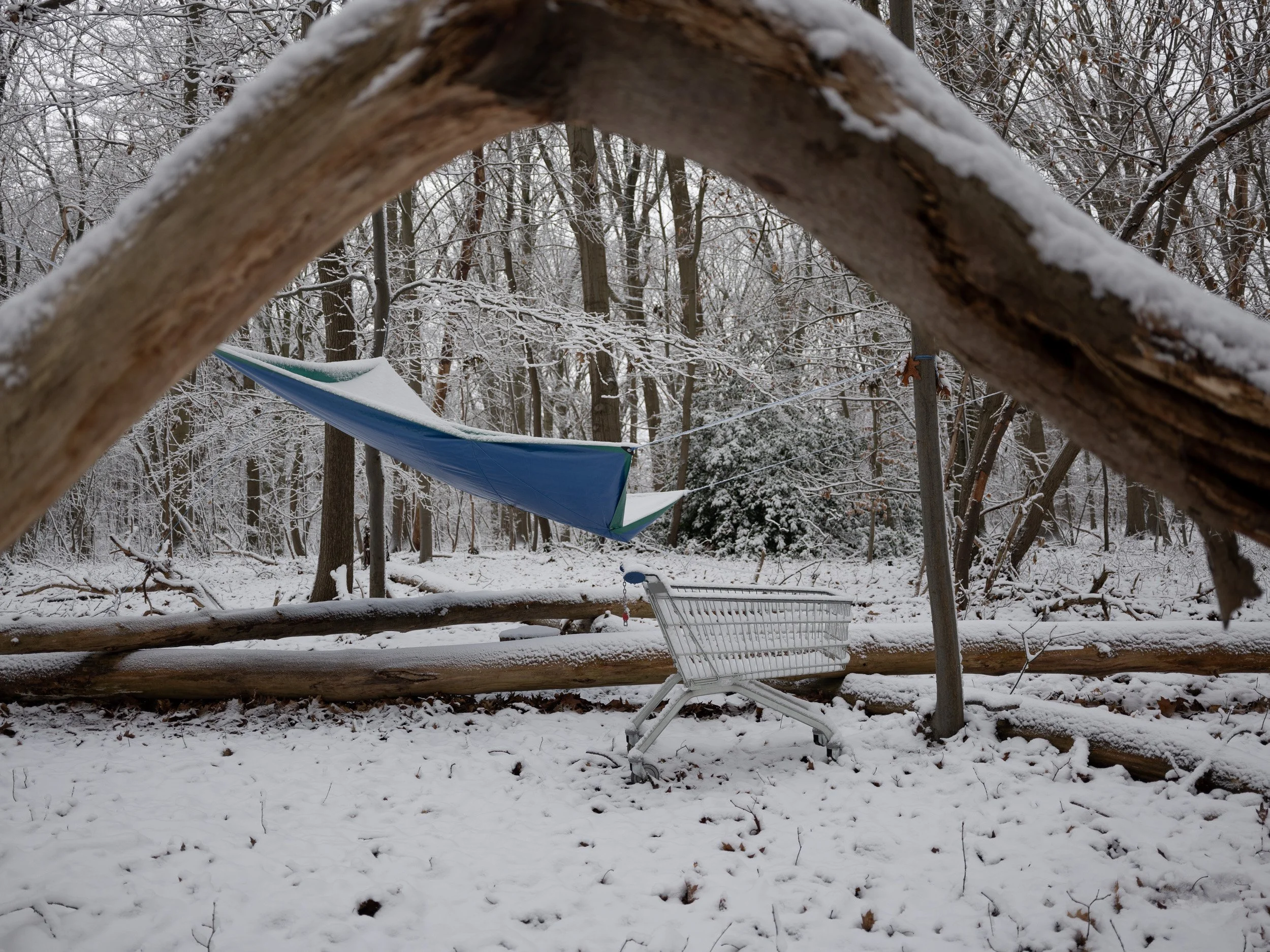
When we went off track, we even discovered some kind of hidden camp in the (small) woods behind our house. Can’t help wondering how and why someone would carry a shopping cart into that place.
And two days later we were back to the usual grey, wet weather.
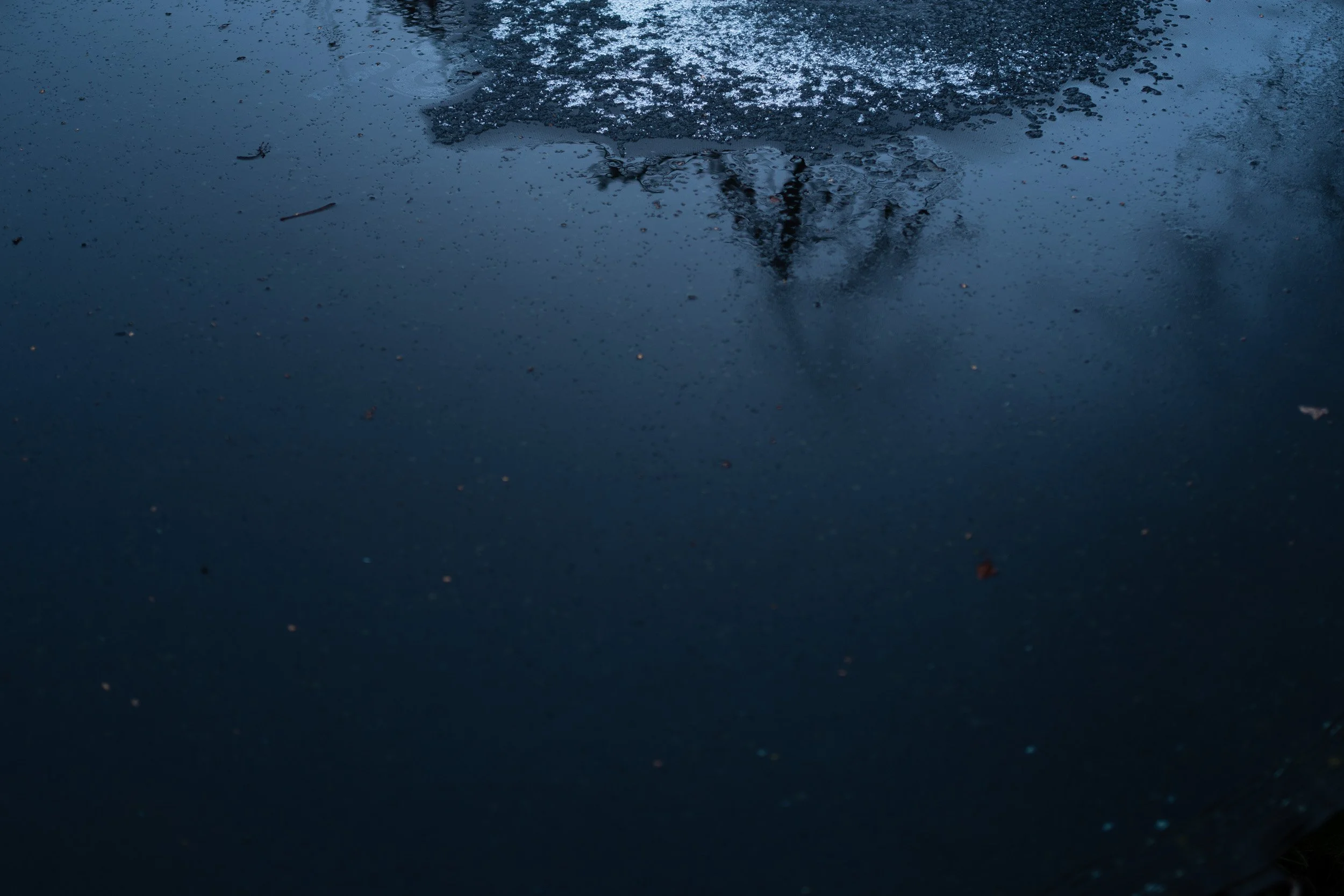
In theory the grey, wet weather is just as interesting as the snow. But it’s way harder to find the motivation to photograph.